


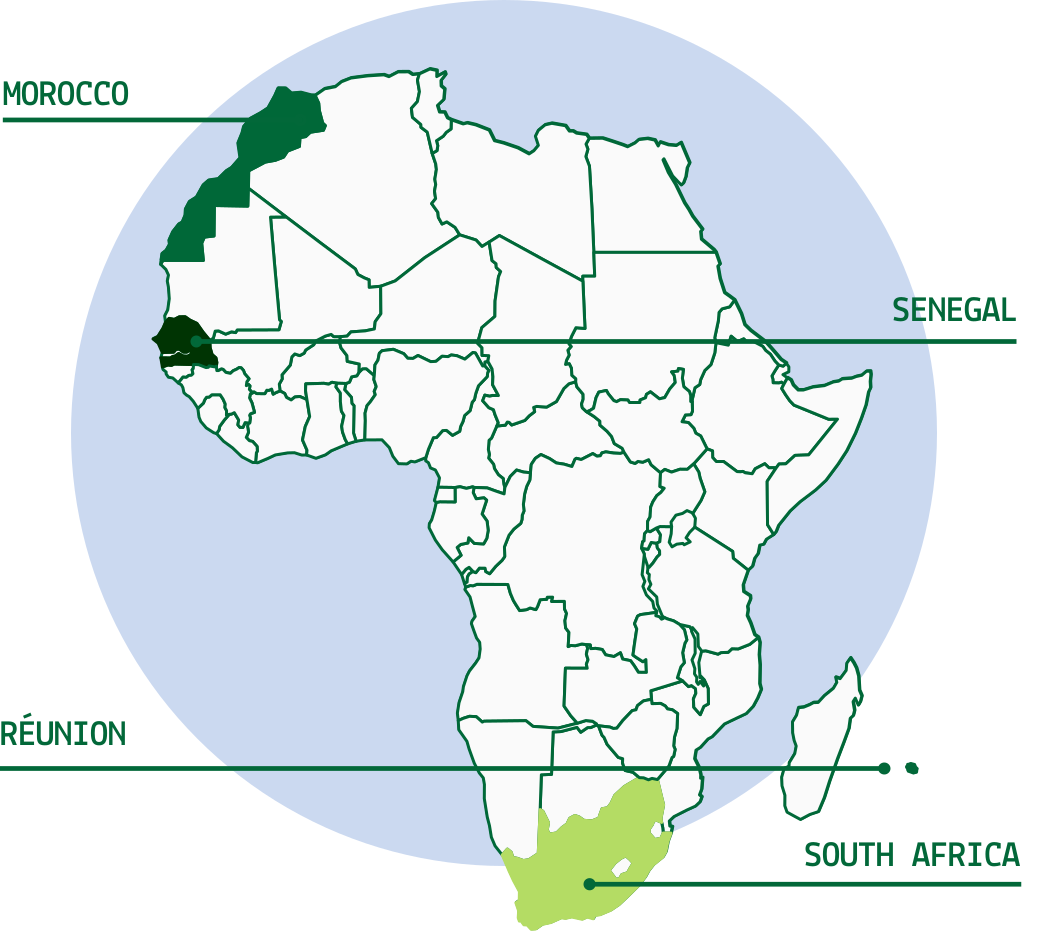
Morocco
The Research Institute for Solar Energy and New Energies (IRESEN) will develop the project's system-level simulation model, using real solar data collected from Morocco, South Africa, and Senegal to test how all components of the technology work together as an integrated system. ENSA-École Nationale des Sciences Appliquées d’El Jadida, Morocco (ENSA-J) will host one of the four African solar test facilities to contribute to the project’s solar production dataset and lead the environmental assessment that will evaluate the full sustainability credentials of the GH-SAFE technology.
South Africa
The North-West University will run a test of the solar-powered hydrogen production system by collecting detailed data on how the electrolyser performs under real and fluctuating solar conditions. The University of Limpopo will host one of the project's four African solar test facilities and lead the final demonstration of green hydrogen production from solar energy. They will validate that the system produces hydrogen of the required quality and consistency.
Réunion Island
The University of La Réunion's Energy-Lab will map and assess solar energy resources and green hydrogen production potential across Eastern Africa and the Indian Ocean, using advanced climate and land-use data to identify the most suitable locations for early deployment of the GH-SAFE technology. This site selection work is a critical part of the project's validation process, as the technology must be proven relevant to the specific solar and geographic conditions of its target deployment areas rather than generalised assumptions. Energy-Lab's findings will feed directly into the project's system modelling and economic feasibility work, anchoring the technology's readiness in real African deployment contexts.
Senegal
Assane Seck University will also host one of the project’s solar test facilities in Senegal. They will work with EnGreen, Senegal and the French National Centre for Scientific Research (CNRS), France, with rural communities in the Casamance region of Senegal to conduct surveys, focus groups, and workshops to understand energy needs, community attitudes, and the social conditions under which the technology would be adopted. This community engagement work will serve as the project's validation process to ensure the technology is tested in a social and cultural environment.