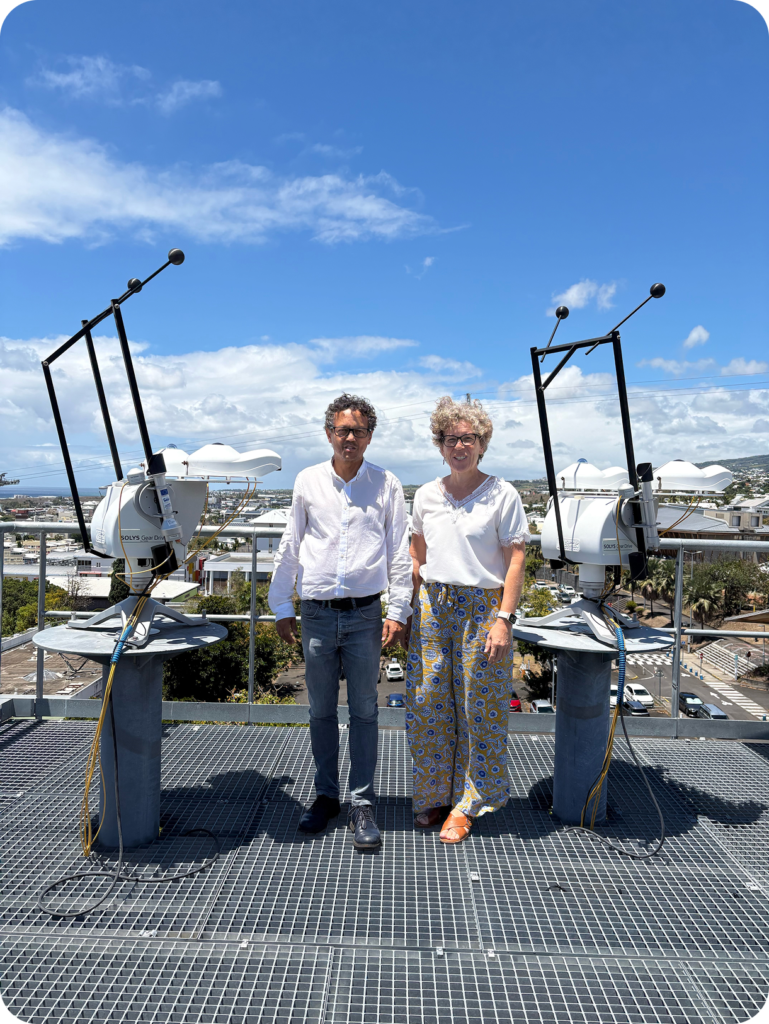

For GH-SAFE, implementing a reliable green hydrogen system starts with understanding the conditions in which renewable energy systems must operate. Solar radiation varies across locations and throughout the year, affecting how much electricity photovoltaic panels can generate and, in turn, how much energy is available for hydrogen production.
This is where ENERGY-Lab, the University of La Réunion’s energy research unit in France, brings its expertise to the project. Drawing on its research on renewable energy resources, climate variability, and hydrogen systems, the laboratory helps explain how environmental conditions shape the performance of green hydrogen technologies.
Located in the South-West Indian Ocean, the laboratory focuses on energy challenges affecting islands and isolated territories, where variable renewable resources and limited connections to wider electricity grids make energy planning particularly complex. Its research combines experimental investigations, numerical modelling, environmental observations and data analysis to develop low-carbon energy systems that adapt to local conditions.
The lab contributes to the project by assessing renewable energy resources and modelling integrated hydrogen energy systems. Its work includes analysing solar and climate conditions, modelling photovoltaic electricity production, and assessing how to size renewable energy systems to meet specific energy needs. These activities help determine how much energy a system could generate under different conditions and how that may affect hydrogen production.
This understanding matters because a solar-powered hydrogen system’s performance depends on more than the technology itself. Changes in sunlight and weather can affect electricity generation, influencing the amount of power available to operate an electrolyser. By analysing environmental data and developing realistic energy-production scenarios, ENERGY-Lab accounts for these variations when assessing the GH-SAFE system’s performance.
They also contribute to the project’s techno-economic assessment by evaluating system configurations under realistic renewable energy production conditions.
The team includes Prof. Michel Benne, Director of ENERGY-Lab, Prof. Béatrice Morel, a specialist in renewable energy resources, climate variability and environmental data, and Dr Dominique Grondin, who works on electrolysis systems, hydrogen production and system modelling.