The Research Institute for Solar Energy and New Energies IRESEN in Morocco is using its expertise in renewable energy, hydrogen production, storage and system modelling to support the development of clean energy solutions in Africa.
As the demand for reliable and sustainable energy solutions continues to grow across Africa, integrating renewable electricity with green hydrogen production and storage presents an important opportunity for expanding clean energy access. However, making these systems effective in different environments requires a clear understanding of how their individual components interact under real operating conditions.
The Research Institute for Solar Energy and New Energies (IRESEN) will address this challenge by developing a dynamic system-level approach through renewable electricity generation, hydrogen production and storage.
Established in 2011, the Moroccan research and innovation institute has been promoting applied research, technology transfer and innovation through collaborative research.
Their activities include renewable energy, green hydrogen, energy storage, smart grids, energy efficiency and sustainable mobility. The institute has also developed major research and innovation platforms such as the Green Energy Park (GEP), which supports renewable energy research, and is developing the Green H2A Platform, a national infrastructure focused on green hydrogen, Power-to-X technologies and pilot-scale demonstration projects.
In the GH-SAFE project, the institute will focus on developing a dynamic system-level model that connects photovoltaic (PV) generation, PEM water electrolysis and Liquid Organic Hydrogen Carrier (LOHC) storage. This means the institute will help develop a digital model that demonstrates how these energy systems can work together efficiently, especially under the varied weather and solar conditions in Africa.
An important element of this work is the use of real solar irradiation profiles from different African countries. These profiles will be used to validate the model and assess how the integrated system performs under different climatic conditions.
This approach is particularly relevant to GH-SAFE’s ambition to develop solutions that can respond to the diverse energy and environmental conditions found across Africa. Rather than assessing the technologies in isolation, the modelling work will provide a broader picture of how the complete energy system can perform in different contexts.
The results from this will provide valuable evidence for optimising the operation of the integrated system and support future deployment decisions.
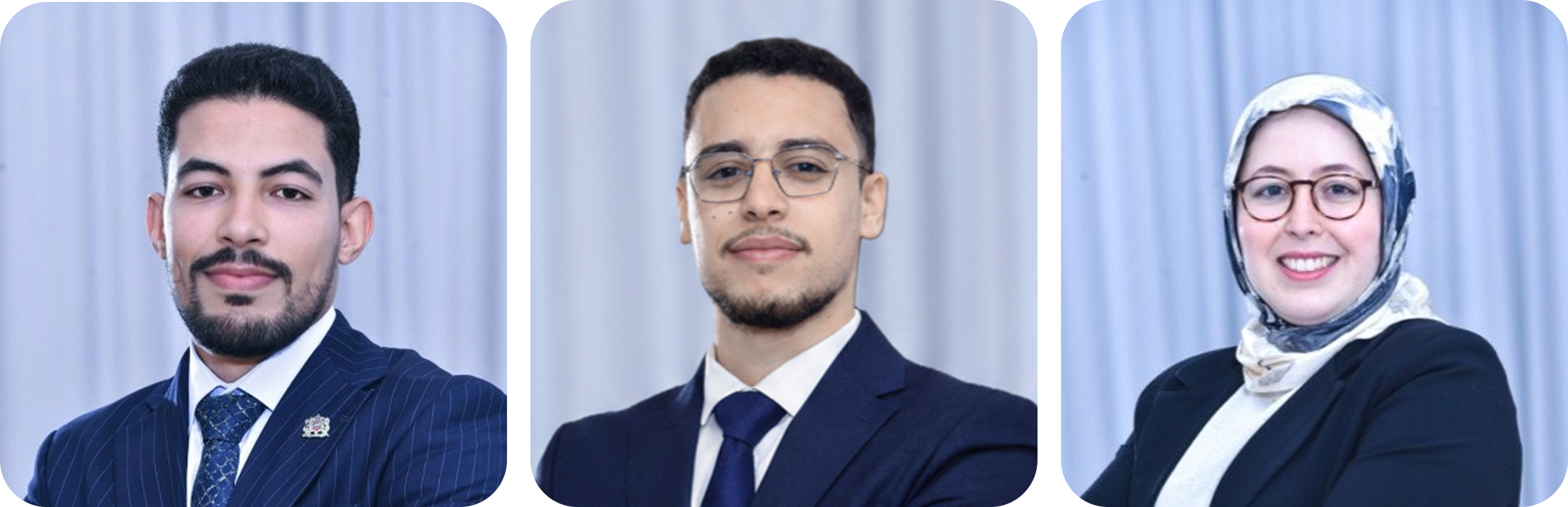
The team includes Nouhaïla Nabil, Head of the Green Hydrogen Systems Department at IRESEN. She brings her expertise in thermal and renewable energy systems, green hydrogen project development, techno-economic assessment, hydrogen strategy and Power-to-X applications. Dr Mourad RKHIS, Hydrogen Storage Systems Manager, and Abdelilah ELKADI, an R&D Electrical and Energy Systems Engineer at IRESEN, will actively work on the project.
As GH-SAFE progresses, the insights generated through IRESEN’s modelling and system integration activities will help the consortium better understand the conditions required for efficient hydrogen production and storage, supporting the project’s broader ambition to contribute to sustainable energy access and a clean energy transition in Africa.